Pages

Thursday, August 8, 2019

Renewable energy

Hurumanu - From Trash to Gas: Biomass

RENEWABLE ENERGY

Aim: To compare the amount of gas that is produced from different types of biomass.

Material:
  1.   (3x) bottle
  2.   Permanent marker
  3.   Disposable gloves
  4.   Cup
  5.   Fresh horse manure
  6.   Mashed banana 
  7.  Funnel, 
  8.  Water,
  9. Balloons (3x)
  10. Vegtable peelings
Steps:


 1.Label all 3 bottles. 

1. Manure
2. manure and vegetable peelings.
3. manure and mashed banana

2. Place 1c manure
              1c manure and 1c vegetable peeling 
              1c manure+1 mashed banana
3.FIll the bottle with water.
4. Place a balloon on the top of the plastic bottle, then put a tape around it.
5. Don't touch it.


A picture of three bottles with balloons on top, containing cow manure with vegetable peelings or mashed banana.
Energy science project


Investigation.


Research the following Biomass fuels. You will need to:

Write a definition of fuel. 
Write 8 sentences about fuel. 
  • How is it made? The plants and the tree absorbed the sun, then once it absorbed the sun energy, it will give the plant and the tree a renewable source of energy.
  • Where is it made? The biomass is produced by gasification in countries such as Sweden, Australia, and the United state. 
  • What is it made with? The biomass is made from a material that comes from living organisms, such as plants and animals.
  • What countries use it? Ireland, USA, and Sweden
  • What uses will it have in the future? It will save a lot of energy and we might probably won't burnt fossil fuel anymore. 
Place 1 image of the fuel.

Biomass Fuel types.

Name: Agricultural crops and wood fuels.
Definition: The cereal crops can be used as a fuel for the production of heat. 

Research: Agricultural crops are a plant's that are grown by a human. Wood fuels are a fuel, such as firewood, charcoal, chips, sheets, pellets and sawdust.


Uses: It can be used as a fuel for the production of heat.


Image:
Image result for what is wood fuels and agricultural use for


Name: Animal waste.
Definition: Animal waste is just basically animal manure. You can sell them to the farmer to help them with their farm.

Research: Manure is an example of animal waste. It is produced when a cow Feces it out. After that you can use there Manure for the farm.

Uses: The manure is used for centuries as a fertilizer for farming.
Image: Image result for what is animal waste used for

Name: Biogas
Definition: The Biogas is a mixture of gases produced by the breakdown of organic matter in the absence of oxygen.

Research: If you don't know what a Biogas is, it is a renewable energy resource:


Uses: The biogas is used to produced raw materials such as agricultural waste, manure, municipal waste, plant material, sewage, green waste or food waste
Image: Image result for resource of biogas


Name: Biofuels
Definition: Biofuels is a Fuel that takes something immediately from a living matter. 


Uses: Fuels for car, Fuel for work fuel, Truck and air crafts.
Image: Image result for biofuels

The water cycle

Hurumanu: The Water Cycle


AIM: TO LOOK AT THE WATER CYCLE AND HOW CLIMATE CHANGE IS AFFECTING IT.

Definition: My group started on Precipitation which is a product of the condensation which makes evaporation leading to water vapour, it is deliverance to fresh water. Since the earth has more carbon dioxide it makes more evaporation, water vapour, condensation and precipitation that leads to the stronger storm, more flooding and making the hurricane.


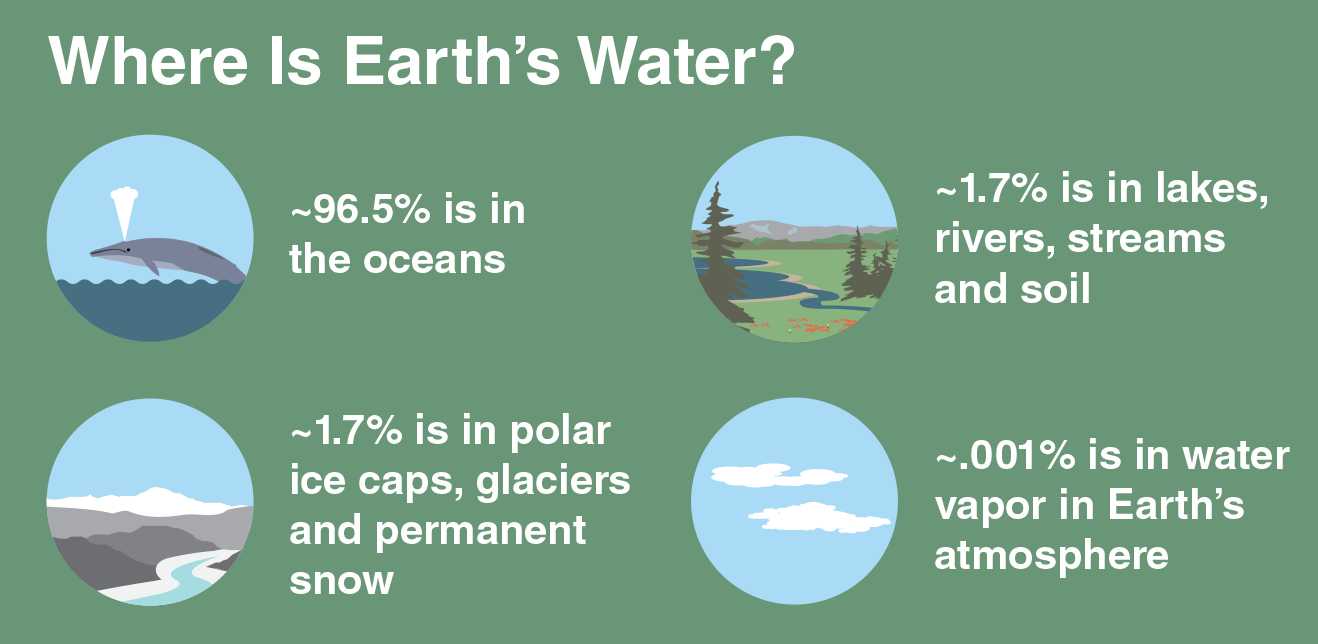
A green box with icons and white text. Text reads: Where is Earth's Water? 96.5 percent is in the oceans; 1.7 percent is in lakes, rivers, streams, and soil; 1.7 percent is in polar ice caps, glaciers, and permanent snow; 0.001 percent is in water vapor in Earth's atmosphere

Scientific words:


  • Evaporation. When water is heated by radiant energy it turns into water vapor.
  • Transpiration. Evaporation from plants.
  • Condensation. When water vapor cools, molecules join together and form clouds.
  • Precipitation. When clouds get heavy the waters falls as rain, sleet, hail, or snow.
  • Acidification: the action or process of making or becoming acidic.

We will be conducting an experiment that looks at the different ways that climate change is affecting the water cycle.
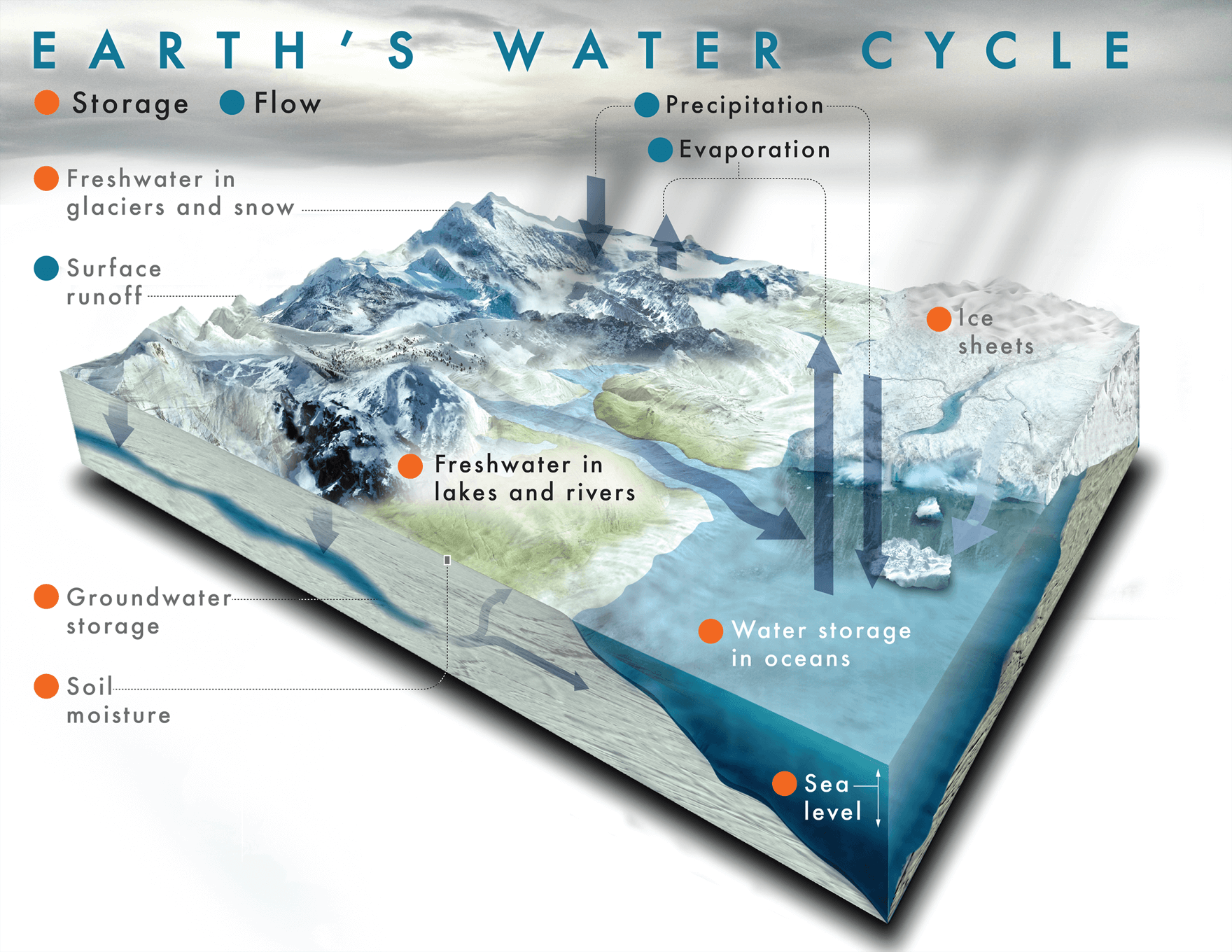
An illustration of the water cycle showing how water travels from rivers and streams to clouds to snow and back again


The Water Cycle: Bag 1
CO2 Water Cycle: Bag 2
Acid
Desert Water Cycle
Bag 3
Does it cycle?
yesyesyes 
Amount of Water
222
Acidity
121

Key: Water and acidity amount: 1 = none 
2 = small drips
3 = large drips

Other comments

1. Water cycle bag 1 had no acidity.
2. The bag 1, bag2 and bag 3 had small drips.
3. Bag 2 and 3 have acidity.

Conclusion:  


Draw a labelled diagram of the Water Cycle

Water cycle words:
  1. Precipitation: Any products that conservation produces. 
  2. Hurricanes: Hurricanes is similar to a storm but its have a strong wind.
  3. Storms: Storm is the weather that is very strong it is mix with thunder, lightning, and rain.
  4. Evaporation: Is when the water goes up to the cloud and then when the cloud is full of water, it will now drop it to earth.
  5. Carbon Dioxide: Carbon dioxide is a hazardous gas and it is also known as the CO2.
  6. Water: Water is a liquid that you can drink without any taste.
  7. Oceans: Ocean is full of marine life and it also has salt water on it so that marine life can survive. 
  8. Water vapour: It is a state of water that became gas.
  9. Freshwater: Freshwater is water that you can drink.
  10. Flooding: Flooding is when all the water goes up and cover the whole city. 
SOLO Hexagons Activity

Water cycle words:
  1. Precipitation
  2. Hurricanes
  3. Storms
  4. Evaporation
  5. Carbon Dioxide
  6. Water
  7. Oceans
  8. Water vapour
  9. Freshwater
  10. Flooding


Monday, August 5, 2019

Solar Energy

Hurumanu - Solar Energy

Solar Energy

Catching the sun movie


Materials:


  1. Cups (x4) 
  2.  Water
  3.  Tin Foil
  4.  2 sheets of white paper
  5.  1 sheet black paper
  6. Thermometer
  7. 1 large cup
  8. 1 heat lamp

Steps

  1.   The first thing you need to do is gather all the material that you need.
  2.   Fill up the cup with water in the right amount, they need to be the same amount.
  3.  Place 2 white paper, black paper, and a tin foil on the table or on a hard surface.
  4.  Put the cup in the top of the paper and the tin foil. 
  5. Place the heat lamp in the front of the cup.  
  6. The temperature should be different. 

Which surface conducts/attracts the most heat?


Time +
temperature
Cup 1
White paper
Cup 2
White paper+ plastic.
Cup 3
Black paper
Cup 4
Tinfoil
0
12oC 12oC 12oC 12oC 
40 minutes
15oC16oC26oC25oC
15 minutes after,
without the heat lamp
18oC18oC240C23oC
15 minutes again but without the heat lamp
16oC160C22oC22oC

Findings: We found out that if you place a cup in the top of the black paper it absorbed more heat than the one with the tin foil in the bottom. The heat of the white paper was almost the same as the white paper with plastic. 


Conclusion:

The black paper and Tinfoil has almost the same temperature. But the temperature of the white paper is the same as the white and plastic paper.